
Routers, services & middlewares
The routing table, filtered by protocol, status and entry point — with backend server health under each service.
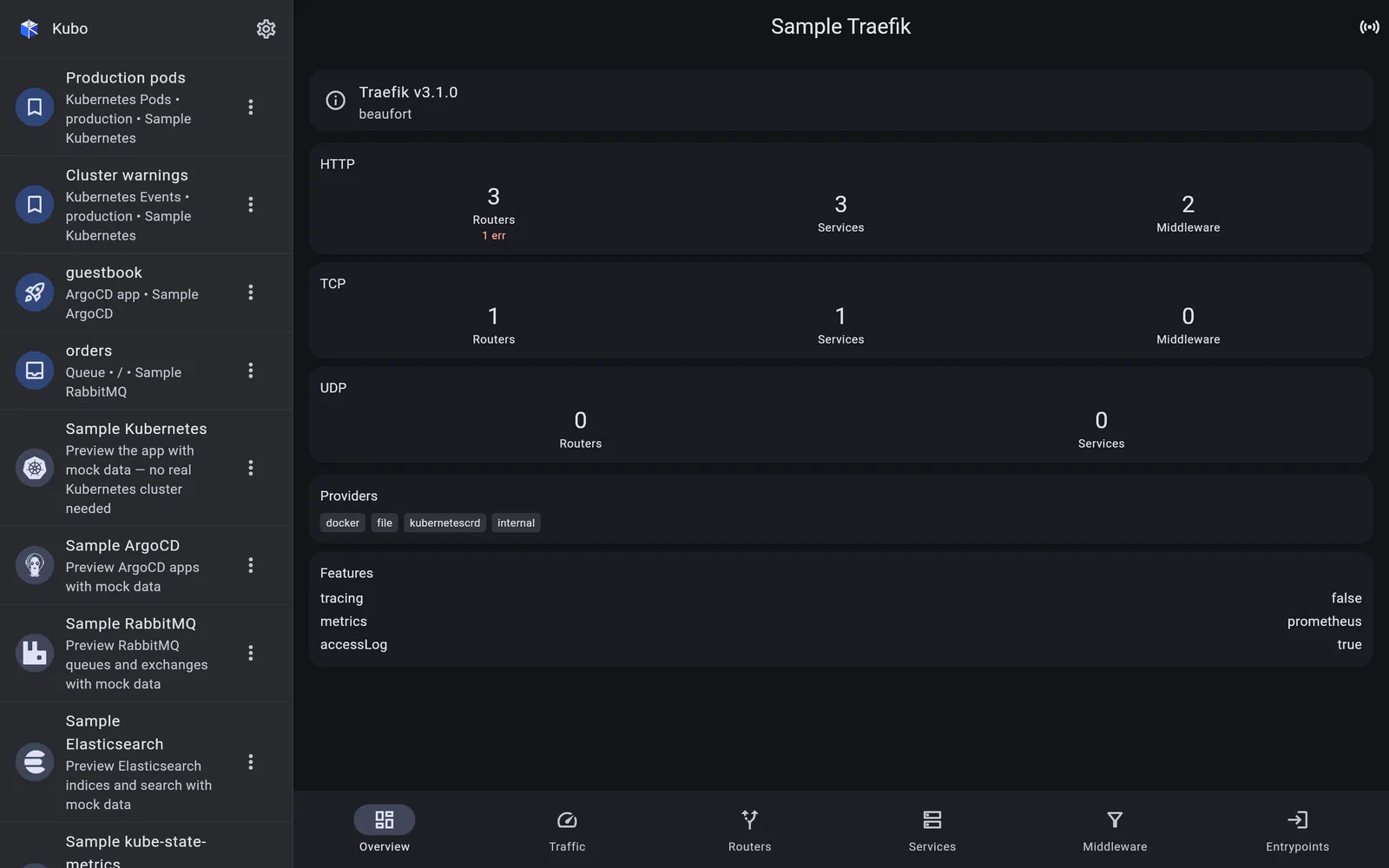
Routers, Services and Middlewares share a protocol segmented filter (HTTP / TCP / UDP) and a free-text search, and all three sort worst-first — anything in a warning or error state is at the top.
Routers
Each row shows the rule (Host(...) && PathPrefix(...)), the entry points it
listens on, whether TLS is configured, and the service it targets. Routers filter
further by status and by entry point, which together answer the question you
actually have: what is serving this hostname on 443, and is it healthy?
Services
Service rows expand to their load-balanced backend servers, each with UP/DOWN health. This is where “the site is up but one in three requests fails” becomes visible — one server in the pool marked DOWN, or worse, marked UP and still failing, which sends you to Traffic for the error rate.
Middlewares
Type and usage per middleware — which routers reference it. Useful for confirming that the rate limiter, the auth forwarder or the redirect you think is in the chain actually is.
Names and providers
Traefik reports qualified names like my-router@kubernetes. Kubo splits that into a display
name and a distinct provider badge, so a list of forty routers coming from three
providers stays readable at phone width, and you can tell a file-provider router from a
Kubernetes CRD one at a glance.
Back to Traefik.