Sun Catcher

Find the best angle for your solar panel

Lay your phone on the panel. Sun Catcher reads the tilt and the bearing off its own sensors, works out where the sun will be for the next twelve months at your exact coordinates, and tells you which way to move.

Free. No account. Nothing leaves your phone.

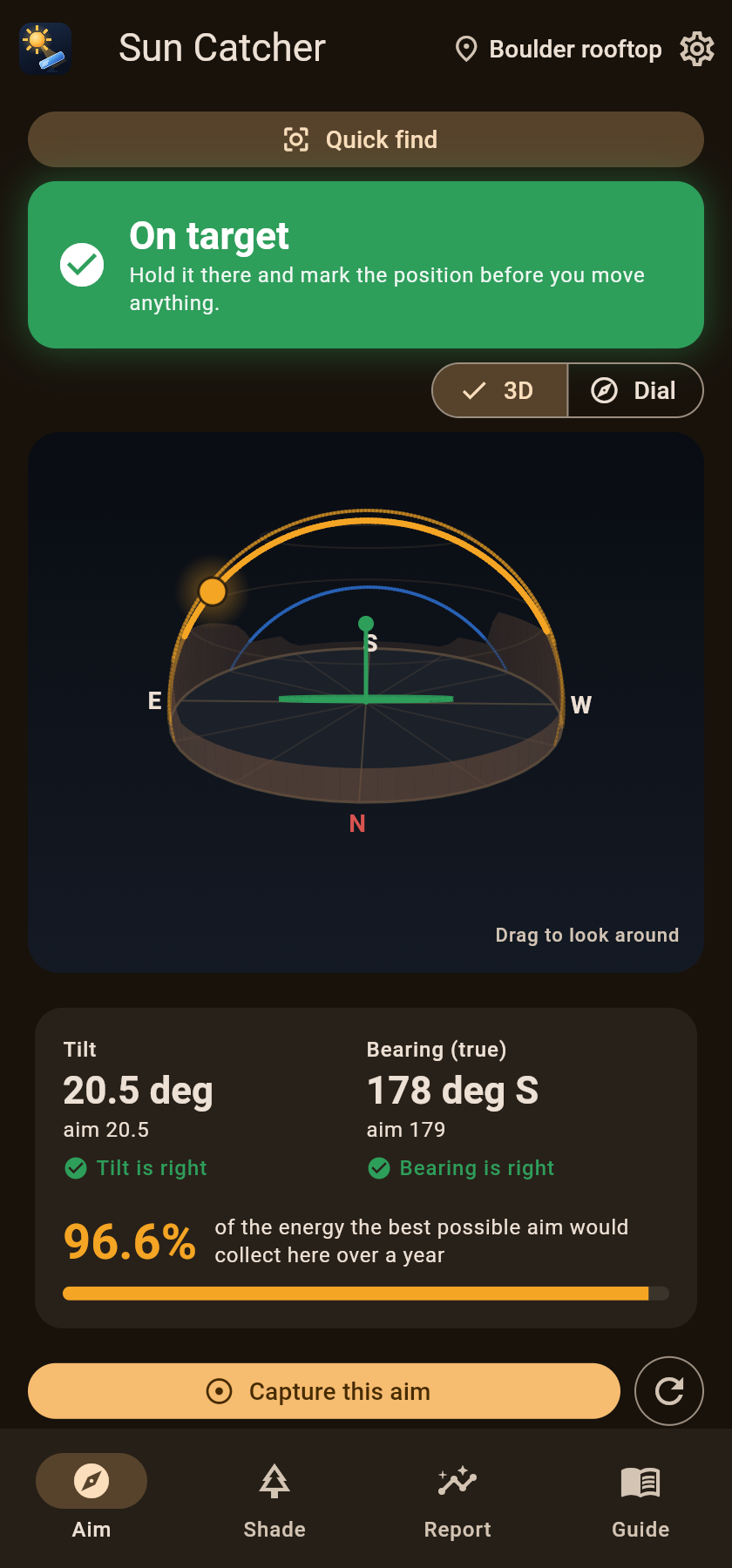
Sun Catcher showing an aim that has landed on target
Your coordinates Not a rule of thumb pulled off a website
True north Compass bearings corrected for magnetic declination
Your skyline Trees and buildings counted, not ignored

What it does

Aim

Turn-by-turn, in plain language

No angles to interpret and no arithmetic to do in your head. Sun Catcher says tip up 4 degrees and turn right 12, updating as you move, and shows you how much of the best possible yield you are collecting right now.

When the aim lands, the phone buzzes and the whole screen turns green — because you are usually crouched next to the panel with the phone face up on it, which is the worst moment to be squinting at a number.
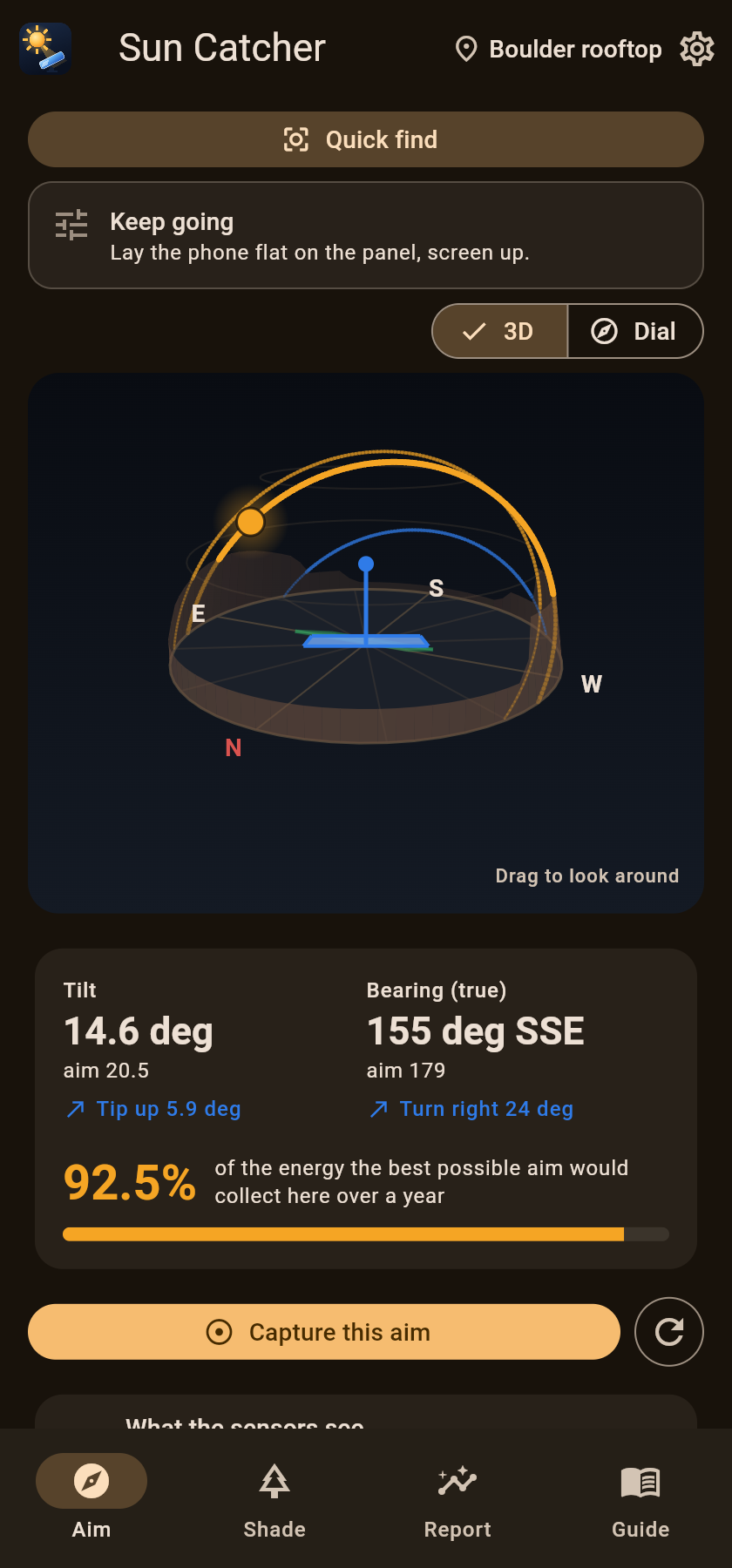
Turn-by-turn aiming guidance
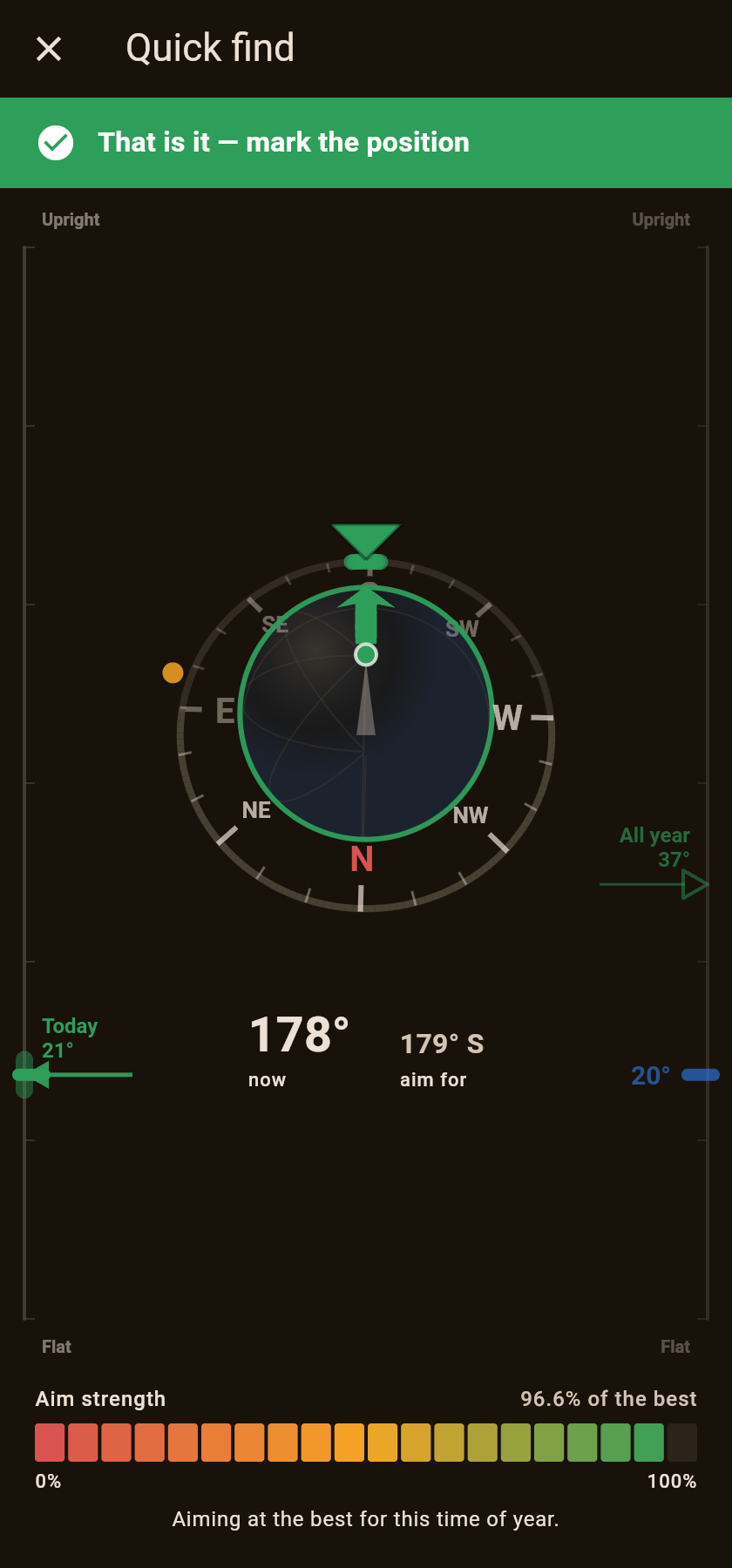
Quick find

Or just line the shapes up

One tap from the aim screen is the whole job with the numbers taken away: a compass ball with a needle painted on it, a tilt scale up each edge, and a strength bar along the bottom. Swing the panel until the needle reaches the marker, tip it until the bar reaches the arrow, and the screen goes green.

Lay the phone screen-up on the sunny face of the panel — which way round it lies makes no difference — and read it at arm's length, in gloves, in the sun.

The quick find screen, green once the aim has landed
See it

The sky, drawn around you

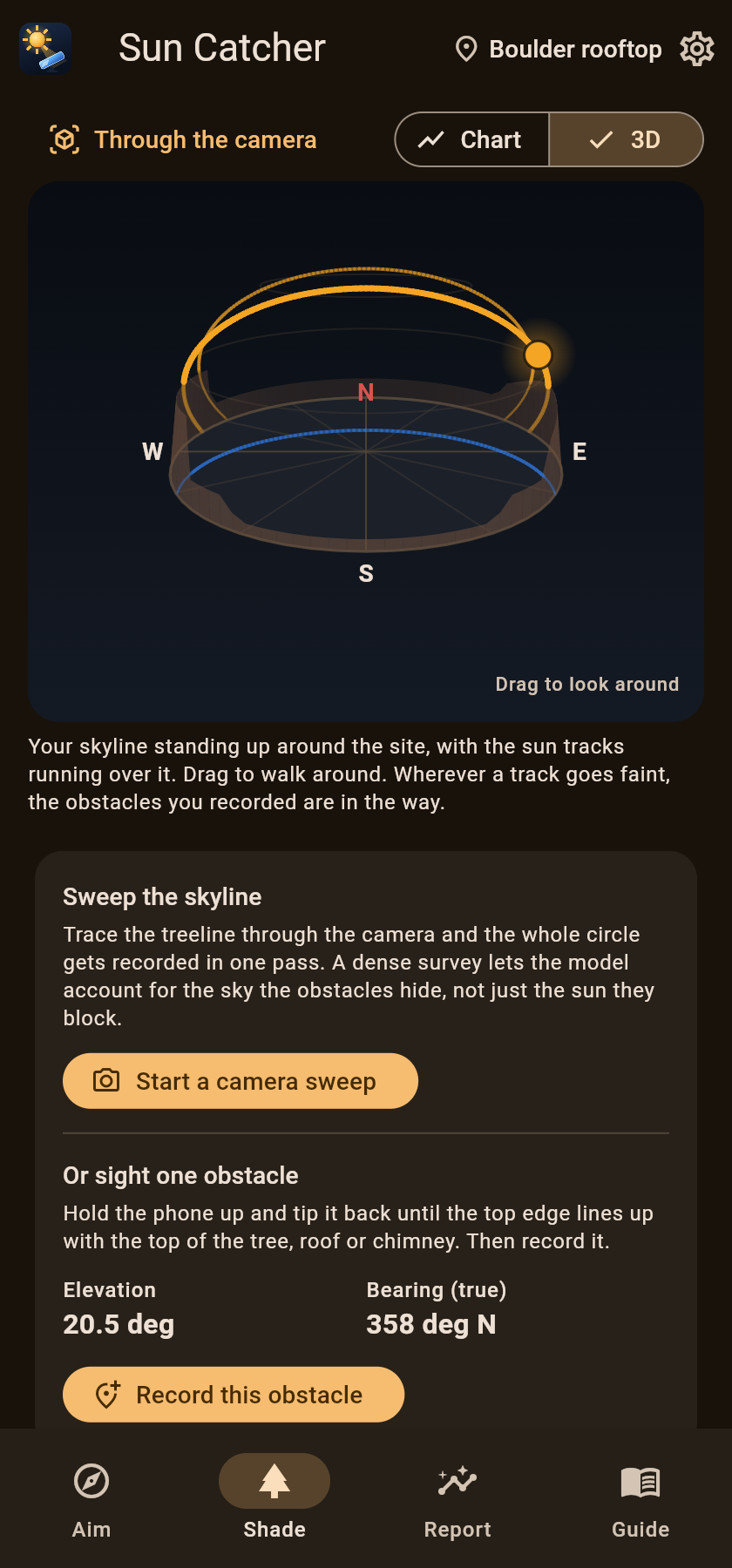
A live three-dimensional view of your site: the sun's track for today and for both solstices, your own skyline standing up around you, and your panel in the middle moving in real time with the phone in your hand. Drag to walk around it.

The panel brightens as it comes square-on to the sun, so the physics is something you watch rather than something you are told.

Three-dimensional view of the sky and skyline
Shade

Shade costs more than angle ever will

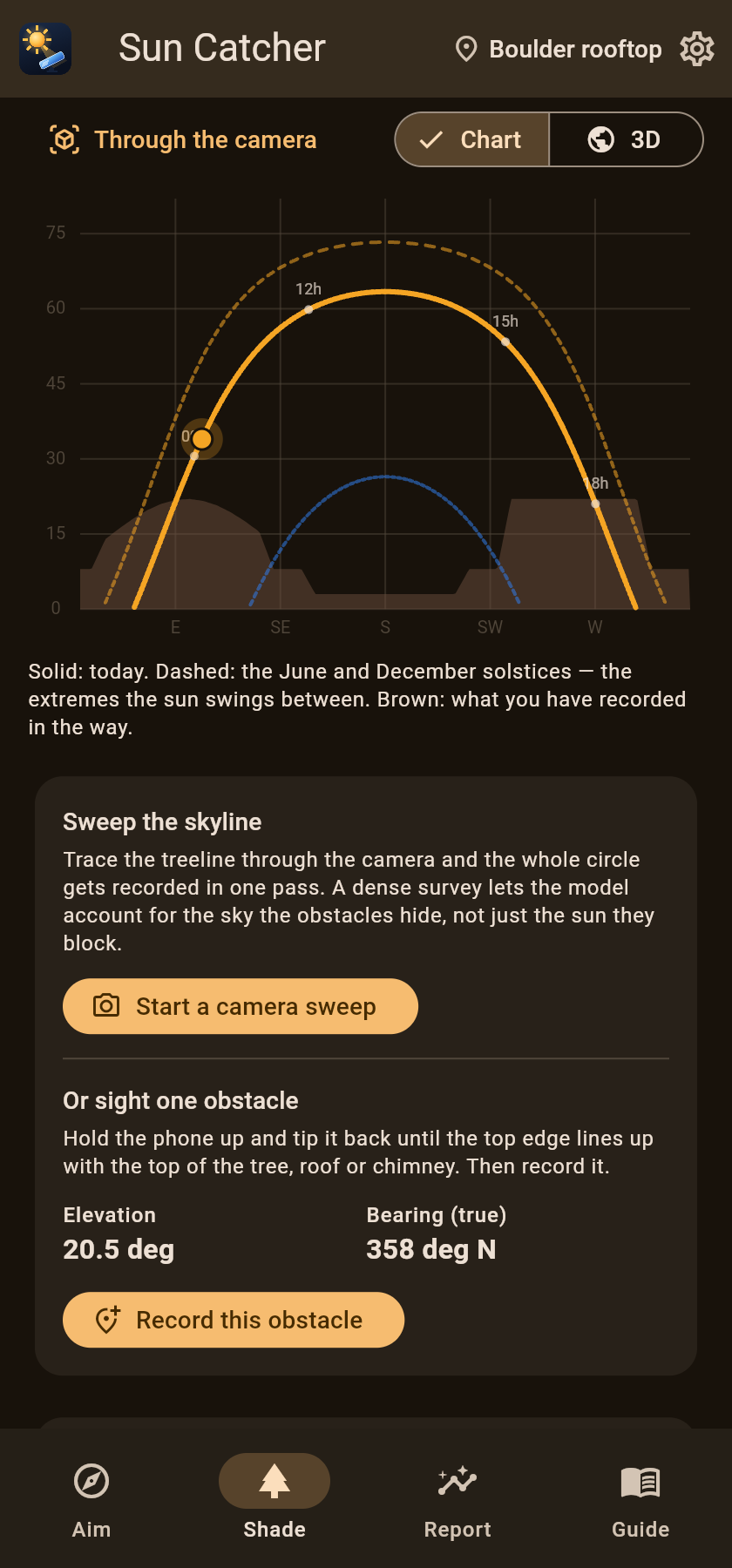
Getting the tilt ten degrees wrong might cost you one or two percent. A tree across the south for two hours a winter afternoon costs far more. Sweep the treeline with the camera and Sun Catcher records the whole horizon, draws the sun's track over it, and works out what it takes off your year.

Where the sun's path meets your skyline, the line goes dim. That gap is your shading, and you can see it.

Sun path drawn over a recorded skyline
Report

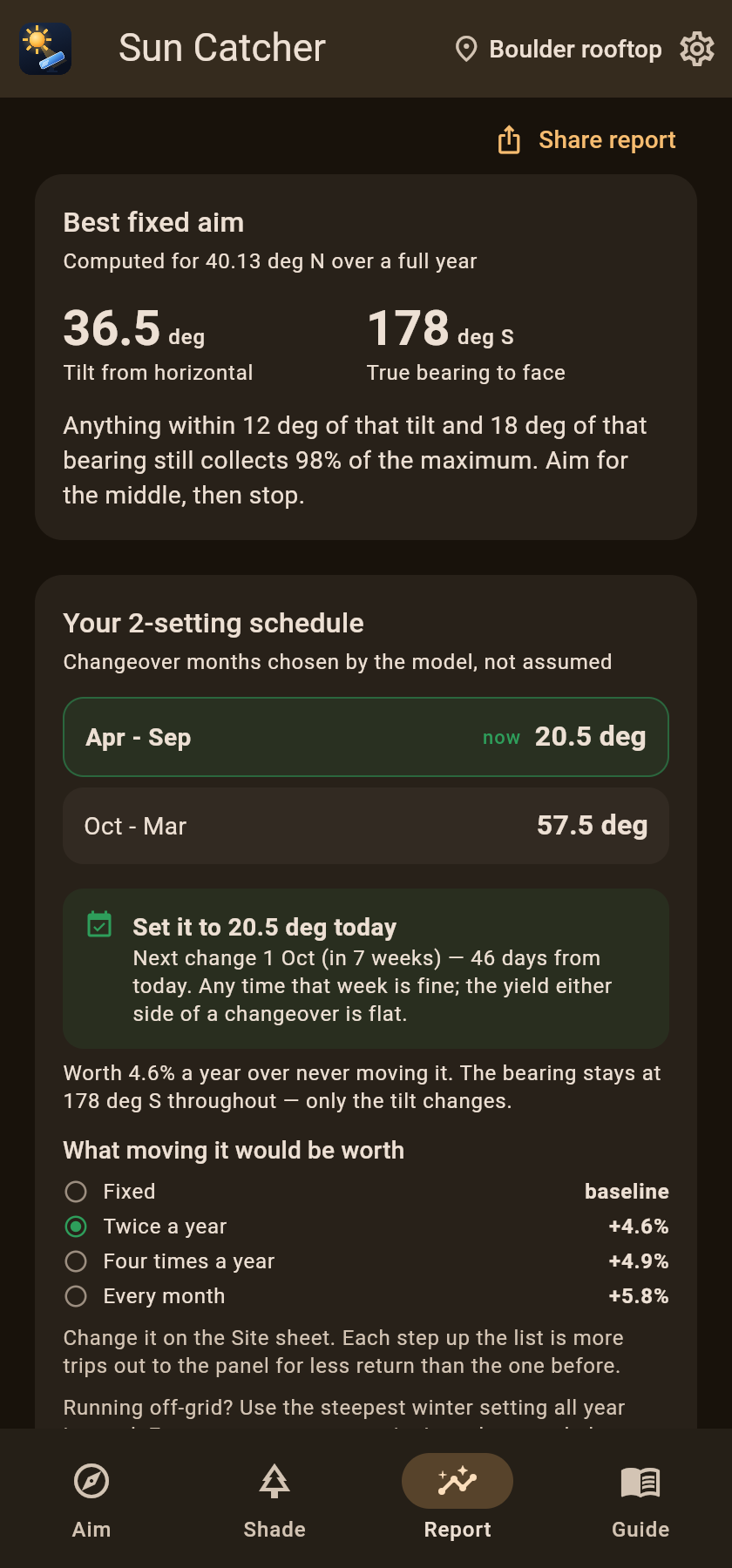
The number, and the reason for it

One tilt and one bearing, computed for your site over a full year — plus what the old rules of thumb would have told you and how much they would have cost. Mounting you can adjust? Sun Catcher works out the seasonal settings, picks the changeover dates itself, and tells you what each extra trip out to the panel is actually worth.

The computed optimum and seasonal schedule
Precision

And when to stop fiddling

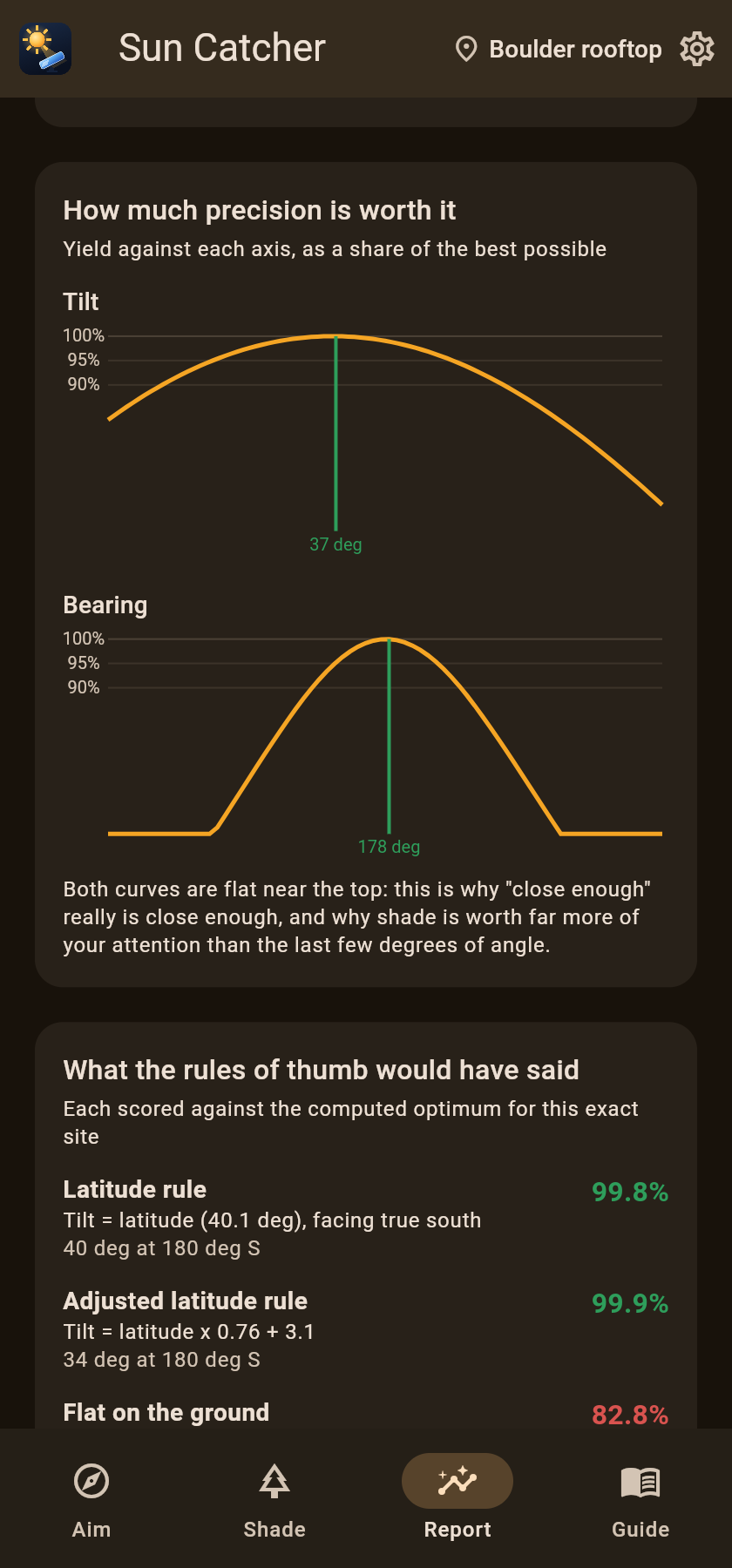
Most guides tell you to be precise and leave it there. Sun Catcher shows you the shape of the curve: at most sites you can be fifteen degrees out and still collect ninety-eight percent. Aim carefully, then go and do something else.

Yield curves against tilt and bearing

How it works

  1. 1

    Stand where the panel goes

    Sun Catcher takes your position and works out the sun's path across the whole year from there. Latitude sets the tilt; the hemisphere sets the direction.

  2. 2

    Sweep the skyline

    Hold the crosshair on the treeline and turn slowly on the spot. A minute of sweeping tells the app what is in the way and when.

  3. 3

    Lay the phone on the panel

    Move the panel until it buzzes. Mark the position. That is the job done.

The sensors Sun Catcher reads

Your phone already has the instruments

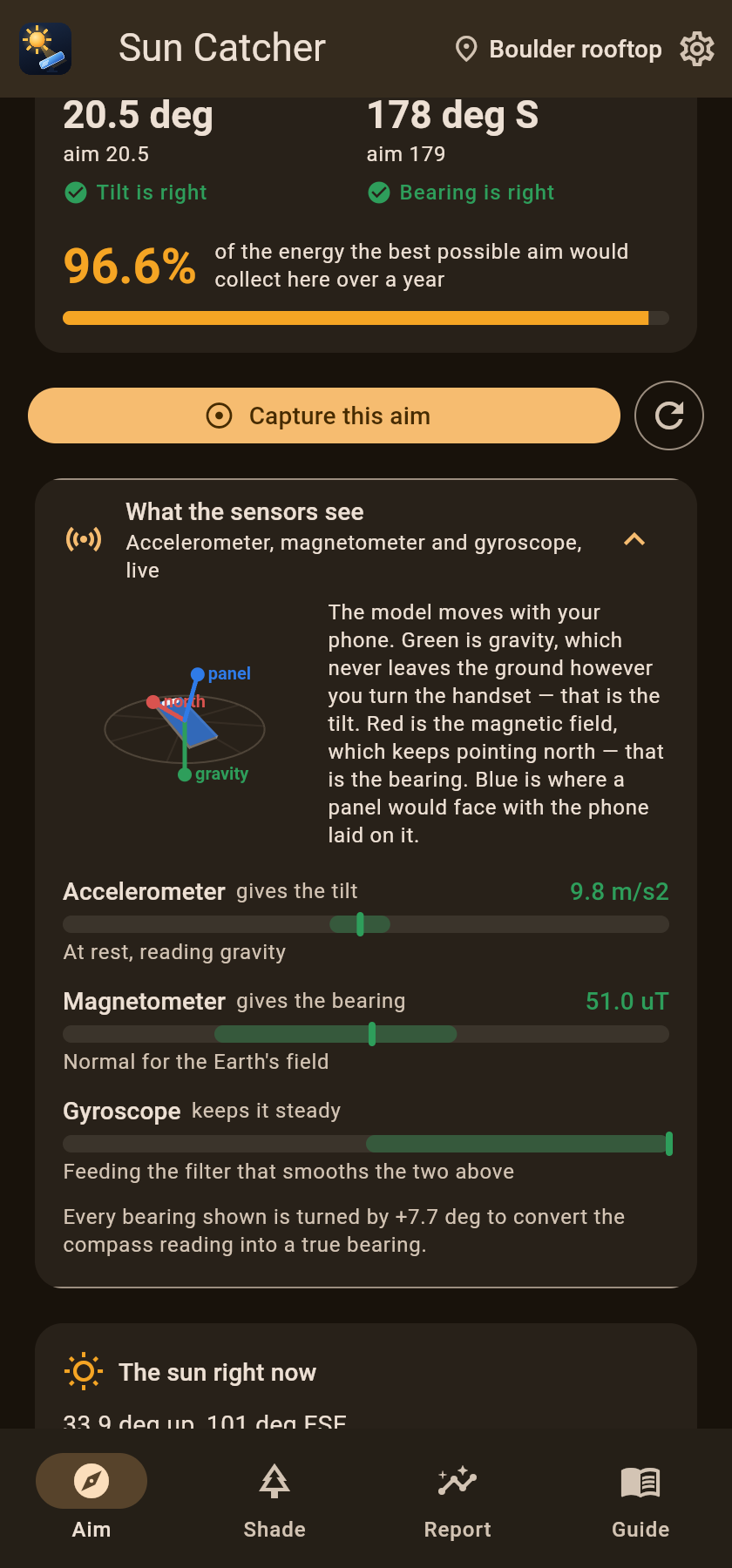
The accelerometer knows which way is down, so it can measure the tilt of anything you rest the phone on. The magnetometer finds north, and the gyroscope keeps the reading steady while you move. Sun Catcher shows you all three at work, and corrects the compass to true north — a difference that runs past twenty degrees in some parts of the world, and a bigger error than anything else you are likely to make.

Get Sun Catcher

Free, works offline, and never asks who you are.