Bank and wire instructions
Wire fraud works because an email that looks like it came from your title company is easy to fake. Whisper messages carry proof of who wrote them.
The situation
Casey is buying a house. The closing is on Friday and the title company has to send wiring instructions for the down payment. This is the moment scammers wait for: they break into someone’s email, watch the thread, and at the last minute send “updated” instructions pointing at their own account. The email looks perfect. The money is gone within hours.
Whisper helps in two ways: nobody else can read the account numbers, and — more importantly here — nobody else can write a message that appears to come from Morgan at Evergreen Title.
Wire instructions by email
- A hacked inbox can send “updated” instructions that look identical
- Account and routing numbers sit in both inboxes indefinitely
- You have to take the sender’s name at face value
Wire instructions with Whisper
- Every message is signed with the title company’s key
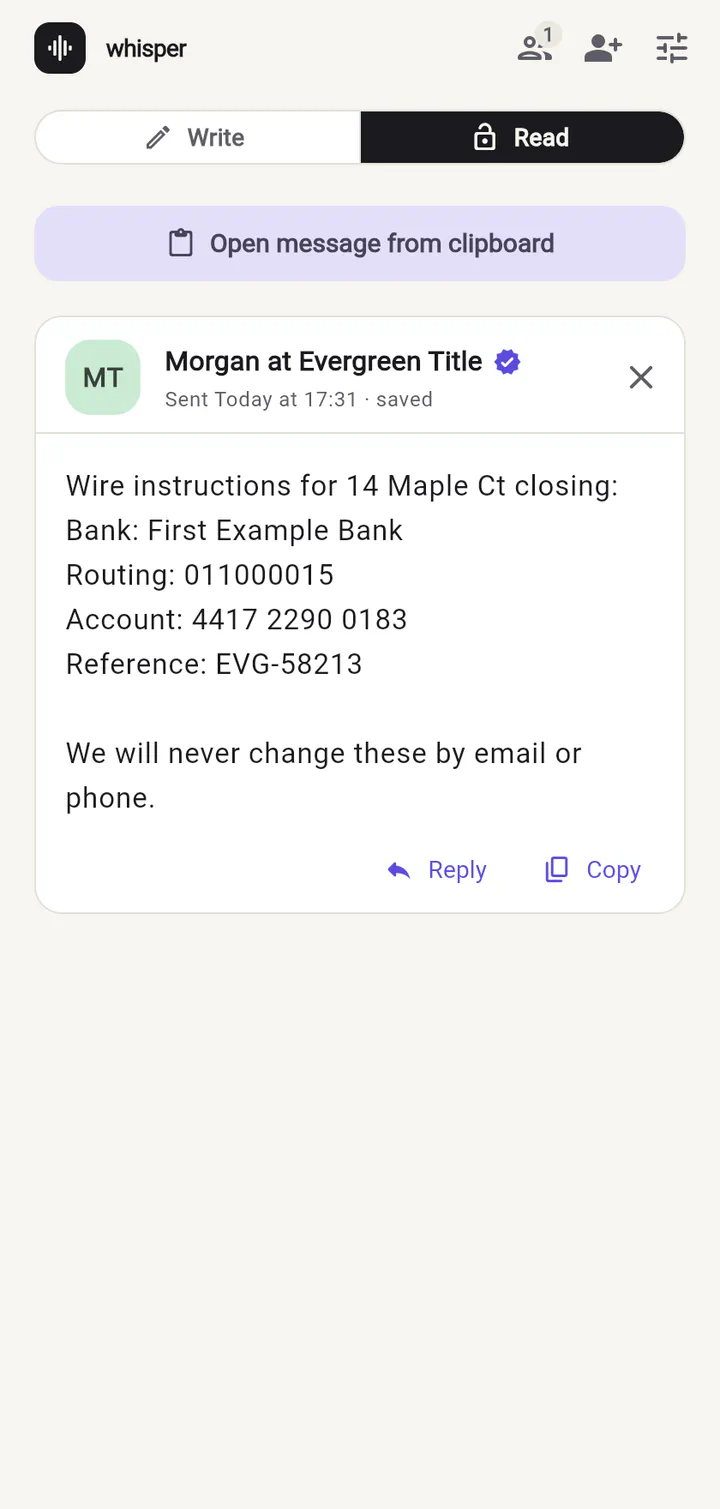
- A ✓ appears only if it matches the contact you added at the start
- A message from anyone else shows up as not in your contacts
How it goes
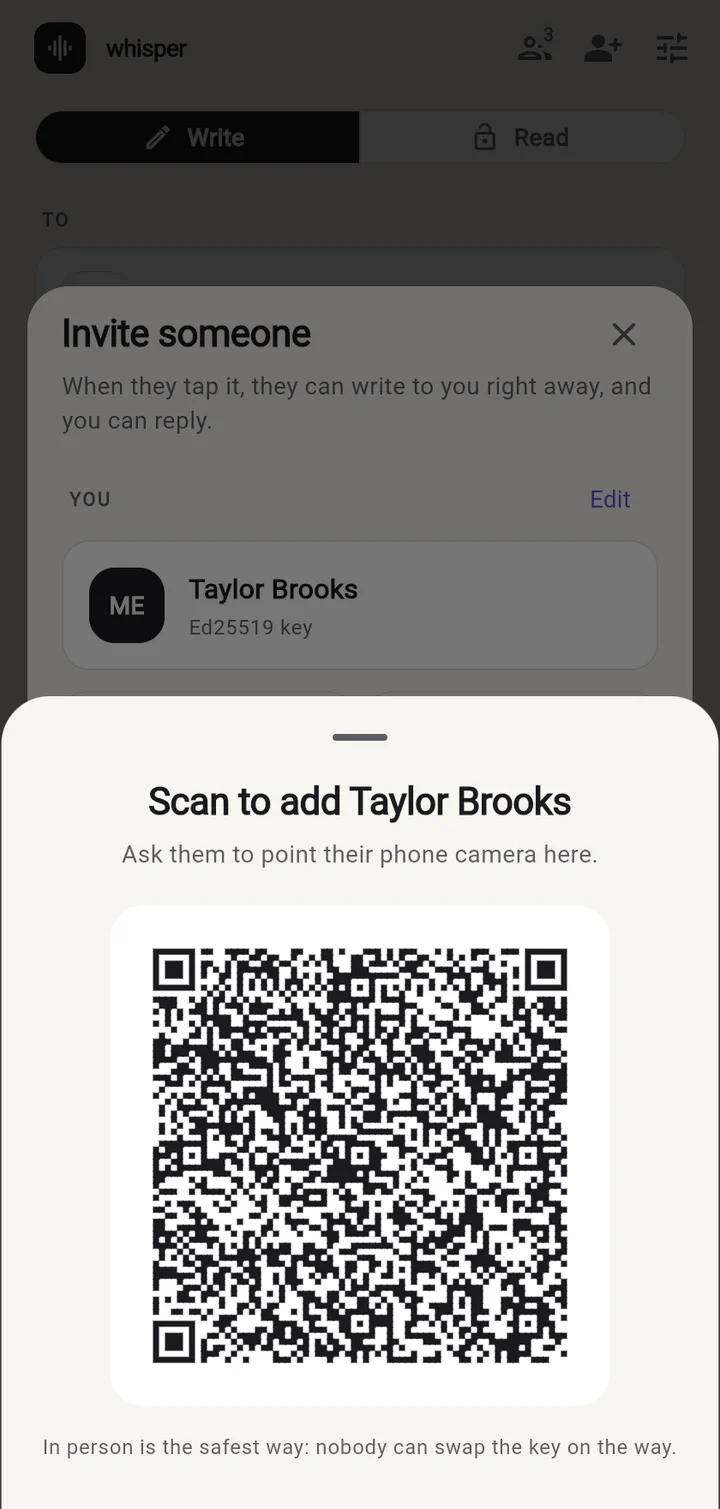
- At the start of the deal — ideally in person at the office, by scanning a QR code — Casey adds Morgan from Evergreen Title.
- When it’s time to wire, Morgan sends the instructions through Whisper.
- Casey opens them and checks for Morgan’s name with the ✓. Anything claiming to be new instructions without it gets a phone call to a number Casey already knows.
Also works for
- Payroll or direct-deposit changes (a favorite target of email scams)
- Paying a contractor, a lawyer’s escrow account or a tuition bill
- Sending your own account details to family for a transfer
Ready to try it?
Whisper for web runs right in your browser. Invite someone and send your first private message in under a minute.